
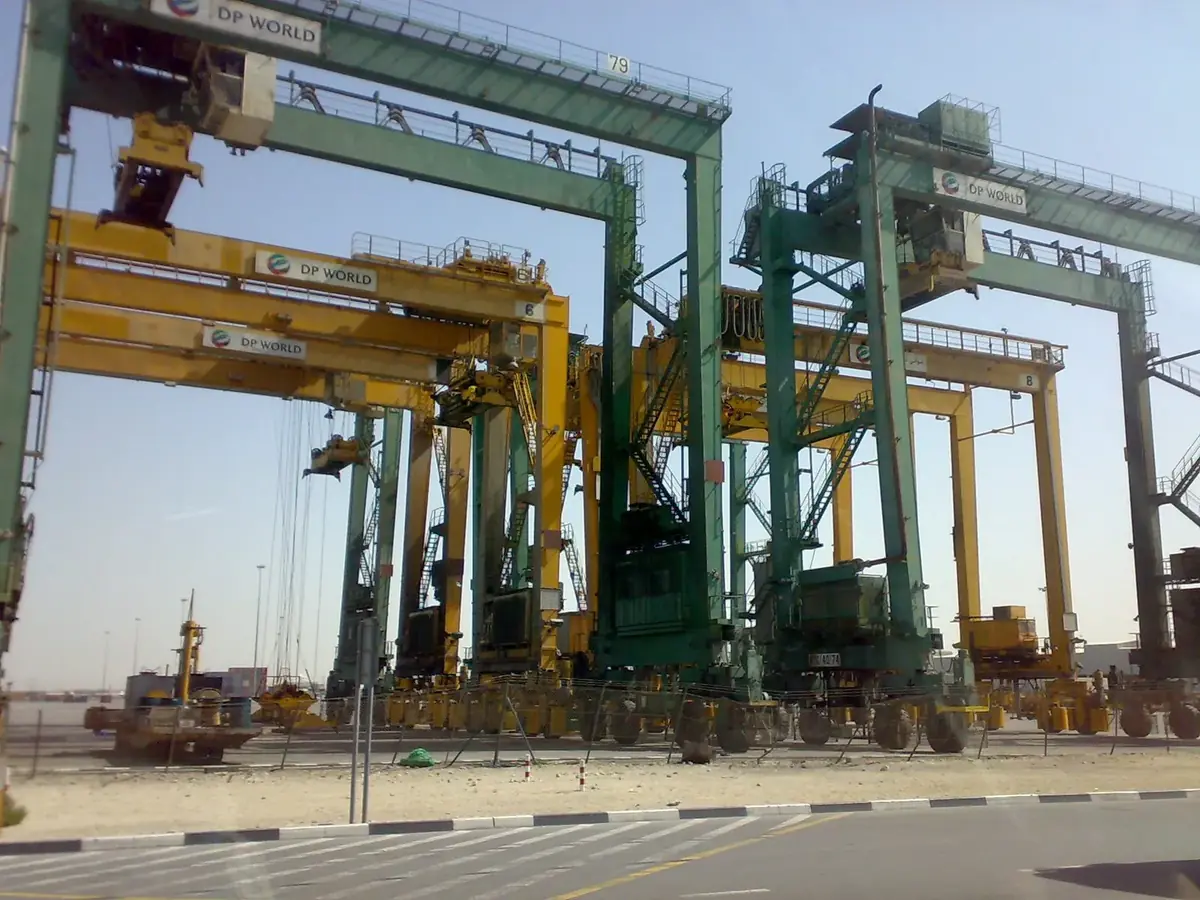
Qatar's free zones are a specialised piece of logistics infrastructure designed for businesses that move goods through Qatar rather than only into Qatar. They combine customs-bonded storage, simplified re-export, and a commercial framework aimed at international traders, and for the right operation they can materially reduce the duty burden and the administrative load. For others, they are overkill. This guide explains what Qatar's free zones actually offer, when they make commercial sense, and how to decide whether a free zone warehouse is the right starting point for your operation.
What a free zone is — and isn't
A free zone is a designated geographic area with its own customs and commercial rules, operated under the Qatar Free Zones Authority (QFZA). Goods stored inside a free zone are treated, for customs purposes, as not yet having entered Qatar's domestic market — even though they are physically inside the country. That single fact is the source of almost every advantage free zone warehousing offers.
Free zones are not the same thing as Qatar's industrial areas. The New Industrial Area, the Old Industrial Area, Logistics Village and Birkat Al-Awamer are standard Qatar warehouse zones — excellent logistics hubs, but their goods are inside the domestic customs regime and behave accordingly. Free zones sit outside that regime until goods formally enter the domestic market.
Two free zones currently play the largest role in logistics:
Ras Bu Fontas Free Zone. Adjacent to Hamad International Airport. Well-suited to air freight, high-value goods, time-sensitive consolidation, and any operation where the goods and the passengers come through the same corridor. WareOne's partner facility at Ras Bu Fontas is priced at QAR 2.2 per CBM per day and offers customs-bonded storage, direct port access, and civil-defence approval.
Umm Al Houl Free Zone. Adjacent to Hamad Port. Well-suited to sea freight, bulk cargo, project cargo, and industrial operations. Larger footprints are available here, which makes it the natural choice for high-volume maritime-entry operations.
The shorthand: Ras Bu Fontas is the airport free zone; Umm Al Houl is the seaport free zone. If your goods come by air, start looking at Ras Bu Fontas; if they come by sea, start at Umm Al Houl.
The core benefits of a free zone warehouse
1. Customs-bonded storage
Inside a free zone, goods can be stored without clearing into Qatar's domestic customs regime. That has two practical consequences.
- Duty is not paid at the point of entry into the free zone — it is paid only when goods formally move from the free zone into the domestic market. Goods that are re-exported never trigger duty at all.
- Working capital is freed up. A consignment worth millions sitting in a bonded warehouse for six months does not need to have its duty pre-paid and tied up. That money stays on your balance sheet.
For any business whose model includes re-exporting all or part of its stock — to other GCC countries, to Africa, to the Indian subcontinent — bonded storage is often the single largest cost saver of the free zone model.
2. Re-export flexibility
Because goods inside a free zone are not yet in the domestic customs regime, re-exporting them is a simpler transaction than re-exporting goods that have entered and then left Qatar. The paperwork is lighter, the tariff treatment is cleaner, and the opportunities to consolidate outbound shipments across multiple onward markets are more natural.
Brands that use Qatar as a regional hub — importing from origin markets, holding in Qatar, and then redistributing across the GCC, MENA or the Indian Ocean corridor — are exactly the kind of operation for which free zones were designed.
3. Foreign ownership and commercial setup
Qatar's free zones are structured to attract international businesses directly, with a commercial framework built around that purpose. That includes more streamlined setup for foreign-owned companies compared with mainland Qatar, and purpose-built facilities on-site. For a multinational deciding whether to establish a Gulf operation, the free zone commercial framework removes friction that the mainland setup process historically added.
(For the current rules on foreign ownership percentages, corporate tax, profit repatriation and any incentives that may be available to your specific operation, consult QFZA or a qualified Qatar commercial lawyer — these rules are set by policy, not by logistics operators, and they evolve. We deliberately avoid quoting specific percentages here.)
4. Infrastructure built for logistics
Free zone facilities are typically purpose-built for modern logistics, with the utilities, connectivity and dock-door infrastructure that mainland warehouses sometimes lack. On-site customs offices mean documentation can be processed in the same place the goods sit, rather than requiring a round trip to a distant customs point. Power, water and telecommunications reliability are generally high, and the proximity to either the port or the airport is the point of the zone.
Free zone in one sentence
If your goods are passing through Qatar rather than only into Qatar, start at a free zone. If your goods are going into Qatar's domestic market, the Industrial Area or Logistics Village is often a better fit.
When a free zone is the right answer
Free zone warehousing makes the strongest commercial case if one or more of these are true.
- You import goods into the region and re-export a material share of them to other GCC countries or beyond.
- Your operation is high-value, time-sensitive or regulated in a way that benefits from proximity to Hamad International Airport or Hamad Port.
- You are a foreign-owned operation setting up a Gulf presence and you need the commercial framework built for that.
- You want to defer duty on inventory that may take months to sell, rather than tying up cash at the point of entry.
- You need customs processing on-site, because your volume or regulatory profile makes distant customs offices impractical.
When a free zone is the wrong answer
Equally important — free zone warehousing is not always the right call. It is likely a worse fit if:
- All your goods are destined for Qatar domestic retailers or end customers. In that case, you gain nothing from bonded storage and you pay a premium over the Industrial Area / Logistics Village price point.
- Your operation needs very low-cost, non-specialised storage for durable goods that tolerate open-yard conditions. A non-AC facility in the New or Old Industrial Area at QAR 1.9 per CBM per day is cheaper and entirely adequate for that use.
- You are early-stage and unsure whether your volume justifies the free zone premium. Start in a cheaper mainland facility, prove the model, and move into the free zone only when re-export volumes justify it.
How to decide
Three questions will answer most cases.
- How much of your stock leaves Qatar again? If the answer is more than a quarter, free zone wins on duty alone. If the answer is none, free zone probably loses.
- How time-critical is the distance to the airport or the port? If you are running air freight that has to be sorted and re-shipped within a day of landing, the airport-adjacent free zone is worth a real premium. If you are handling bulk sea freight, the seaport-adjacent option wins.
- What is the regulatory profile of your product? Highly regulated, high-value, or controlled products benefit disproportionately from on-site customs processing and tighter audit trails.
Bonded storage at Ras Bu Fontas
Customs-bonded warehousing inside the Qatar Free Zone with direct port access, starting at QAR 2.2 per CBM per day.