
Fast-Moving Consumer Goods (FMCG) — food, beverages, household supplies, personal care, cosmetics — are the most demanding category in Qatar logistics. Volume is high, margins are thin, products are often temperature-sensitive, retailer compliance is strict, and a single stock-out at the wrong time can mean losing shelf space to a competitor for months. This guide covers the structural choices that make FMCG supply chains in Qatar work — the ones that matter more than the usual industry advice about "visibility" and "optimisation".
The Qatar FMCG landscape in shape, not in numbers
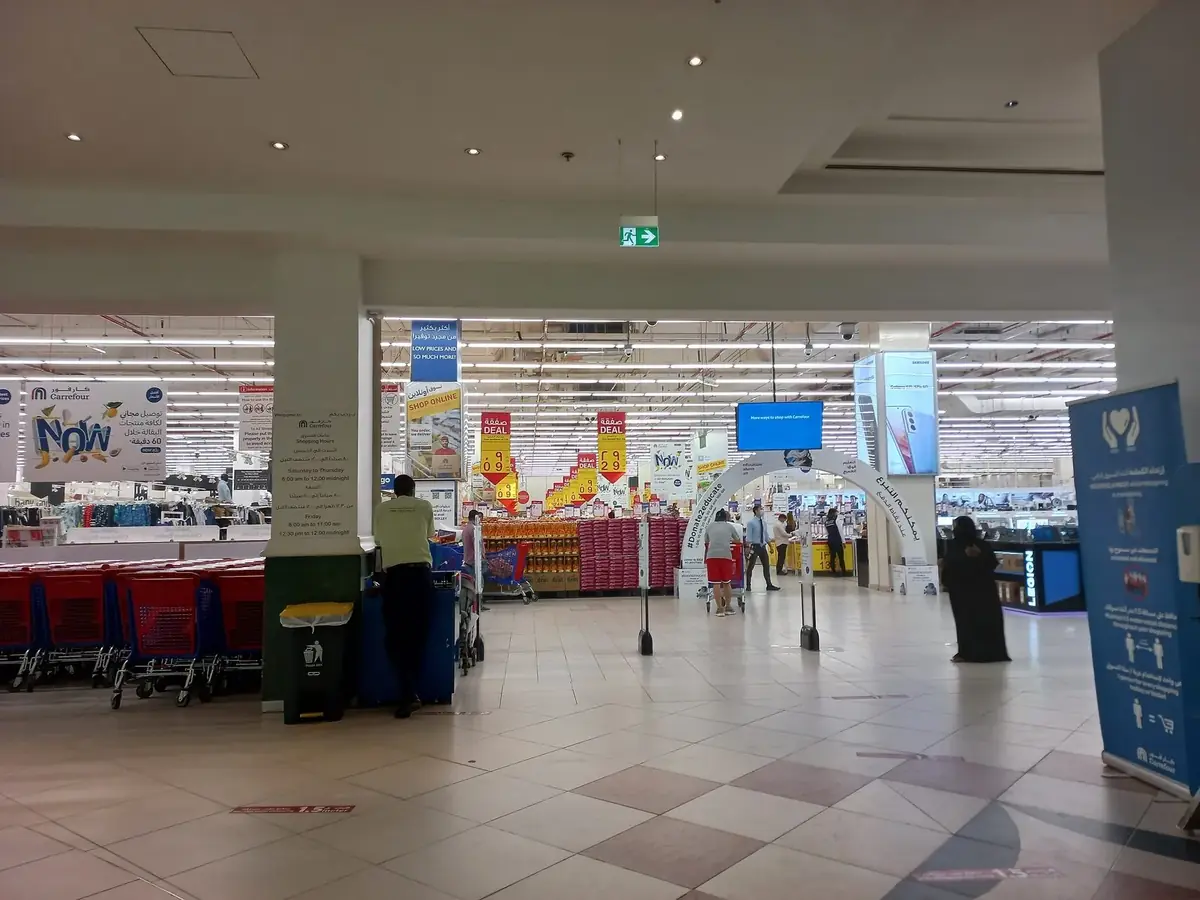
Retail distribution in Qatar is concentrated. A small number of large retail chains account for the bulk of modern-trade FMCG volume — hypermarkets, supermarkets and value-format chains operating across Doha, Al Wakra, Al Khor, Al Rayyan and the Industrial Area. There is also a substantial traditional-trade channel of independent grocers, bakeries and specialty stores, plus a growing modern-trade online tail through marketplace grocery and quick-commerce apps.
For a brand, the structural point is this: most of your volume will flow through a small number of retail partners, each with their own delivery windows, documentation standards, delivery vehicle requirements and compliance expectations. Treat every retailer as a separate operational customer with a separate playbook.
Critical success factor 1 — Temperature control across the whole chain
In Qatar's climate, "ambient" is not really ambient. A product category that sits at room temperature in Europe may need an air-conditioned or even temperature-controlled environment in Qatar simply to maintain its integrity. Chocolate, cosmetics, waxy personal-care products, certain beverages, and many snack foods behave differently in a 45°C ambient environment than they do in a 20°C one.
That has two practical consequences.
First, the warehouse zone matters more than the invoice line suggests. A product that rolls off an Italian truck at 20°C and into a non-AC Qatar yard at 45°C is not the same product on the shelf. The temperature-controlled storage option (16°C to 21°C) inside our partner warehouse network is designed exactly for this in-between category — products that are too sensitive for open yard storage but do not need chiller or freezer infrastructure.
Second, the transport leg has to match the warehouse. A product stored at 22°C to 25°C in dry AC storage and then loaded into a non-refrigerated truck for distribution experiences exactly the kind of thermal shock that causes quality complaints. Retailers increasingly audit the transport leg — reefer vehicle on the invoice is different from reefer vehicle at the dock. A mixed fleet (3T reefer trucks for larger loads, 1T reefer vans for smaller deliveries) lets the distribution plan match the storage plan SKU by SKU.
Critical success factor 2 — Planning around Ramadan and Eid
Ramadan and Eid are the most predictable — and most often mishandled — demand events in the Qatar FMCG calendar. Multiple categories see significant pre-Ramadan and in-Ramadan demand shifts, with food, beverages, dates, dried fruits, gift sets, fragrance and cosmetics leading the way. Planning needs to start well in advance of the holy month, not in the week before.
A working Ramadan plan covers four fronts:
- Pre-positioning stock at distribution centres weeks before Ramadan begins, not days. Inbound freight capacity tightens globally as every brand in the region tries to do the same thing at the same time.
- Securing additional warehouse space before the squeeze hits. A CBM-based flexible warehousing contract is far less painful to scale up than a fixed-footprint lease.
- Arranging supplemental transport capacity — more vehicles, longer windows, and contingency drivers — on contract, not on an ad-hoc "book on the day" basis.
- Coordinating with retailers on promotional activity and delivery windows, because every retailer's Ramadan is also the most demanding part of their year.
After Ramadan, the post-Eid lull is equally predictable. A good plan scales back distribution capacity and trims inventory just as aggressively as it scaled up. Overstock that enters Q2 in a post-Eid lull tends to age expensively.
Critical success factor 3 — Retailer compliance, not just distribution
Selling into Qatar's modern-trade retailers requires compliance with their documentation, labelling, packaging and delivery standards. These are real gatekeepers; a truck turned away at a retailer dock costs the brand the sale, the driver's time, and the retailer's trust.
The standing requirements for most FMCG products entering Qatar's modern trade are:
- Arabic labelling on consumer packaging — product name, ingredients, manufacturer, expiry.
- Appropriate product registration or certification for food, cosmetics and supplements — depending on the category, this can mean MOPH approval, GSO-aligned standards, or equivalent.
- Shelf-life and batch tracking — retailers generally refuse products that arrive below a minimum remaining shelf life (often a third of total shelf life).
- Halal certification where relevant — a non-negotiable for the food category.
- Scheduled delivery windows — missing a window usually means the delivery is refused and rescheduled, at the brand's cost.
A logistics partner that handles the warehouse but leaves compliance to the brand is only doing half the job. The operational ideal is a partner who clears customs as Importer of Record, stores stock correctly by temperature zone, picks to the retailer's documentation standard, and delivers within the retailer's window — all on one invoice.
FMCG supply chain, one partner
Temperature-controlled storage, retailer-ready distribution, customs, and compliance — across Qatar and the wider GCC.
Critical success factor 4 — Volume-based pricing that matches how FMCG actually moves
FMCG volume varies enormously through the year — the same brand that ships four trucks a week in a slow month may ship twelve in the week before Ramadan. A fixed, per-vehicle pricing model punishes that reality in both directions: in the slow months you pay for capacity you do not use, and in the peak months you fight for vehicles you cannot get at short notice.
A pay-per-CBM model — charging by the volume actually moved rather than by the vehicle — is structurally better suited to FMCG. It matches cost to activity in both directions. WareOne's distribution service is built on this model: you pay per CBM, the vehicle mix is chosen to fit the load, and you save money on both ends of the cycle rather than just the top.
The structural choices that make the difference
If you take nothing else from this article, take these four structural choices:
- Match warehouse temperature to product sensitivity, not to category convention.
- Plan Ramadan and Eid months in advance, with both inbound and distribution capacity locked down.
- Choose a logistics partner who owns retailer compliance, not just transport.
- Price per CBM, not per vehicle, so your cost scales with your business and not the other way around.
Everything else — routing optimisation, dashboards, visibility — is downstream of these four.